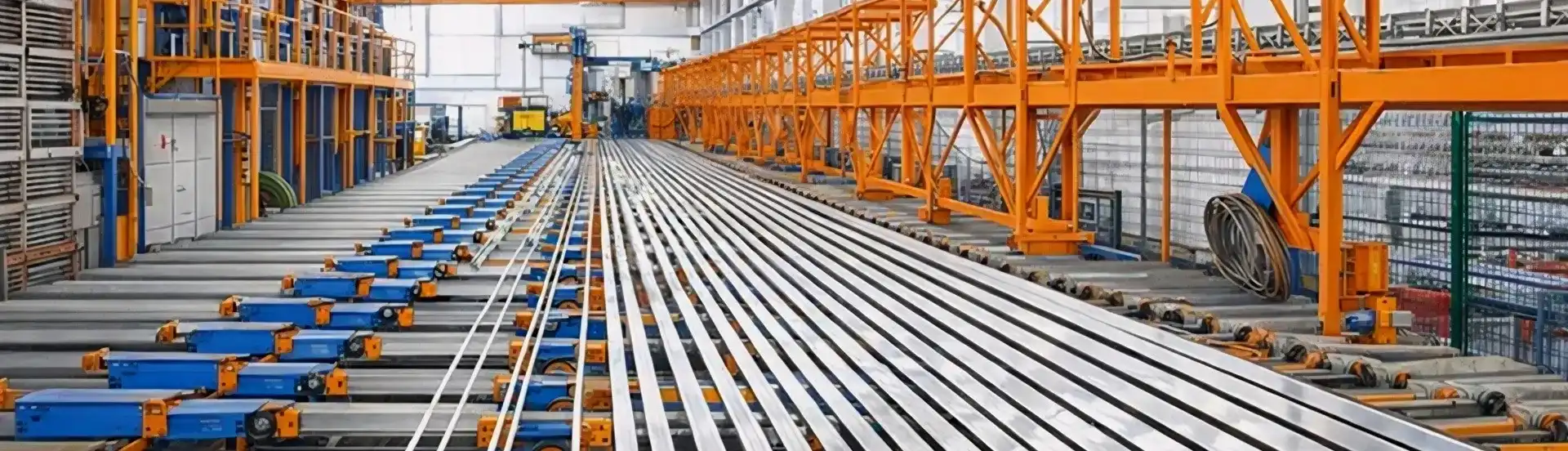
Why Source Aluminium from Turkey?
Turkey ranks among the major aluminium processing hubs serving Europe, with around 75 dedicated extrusion companies and an export-oriented downstream industry that ships a large share of output to EU markets.
For B2B buyers, that means access to competitive mill options, EN- and ASTM-based supply routes, shorter regional transit times and one RFQ process benchmarked across multiple qualified producers.
Sea freight from İzmir, Gemlik and Mersin typically reaches key European ports in 10–15 days, which gives Turkish sourcing a meaningful lead-time advantage against many Asian origins for standard project and replenishment orders.
MetalFromTurkey acts as a single sourcing contact for aluminium buyers that need certified Turkish supply, commercial benchmarking, QA coordination, inspection support and export documentation under one workflow.
Key buyer advantages
- Benchmark one RFQ across multiple certified Turkish mills instead of negotiating factory by factory.
- Source extrusions, sheets, coils, plates and tubes through a single commercial contact.
- Combine EN 755, EN 573, EN 12020 and ASTM routes according to the target market.
- Receive EN 10204 Type 3.1 mill test certificates and export paperwork with each shipment.
- Add SGS, BV or TÜV third-party inspection when a project requires witnessed checks.
Our Aluminium Product Range
MetalFromTurkey supplies aluminium extrusion products, anodized profiles, flat-rolled sheet and plate, round and square tubes, and project-based custom extrusions from specialist Turkish partner mills selected per order.
Extrusion Profiles (EN 755-2)
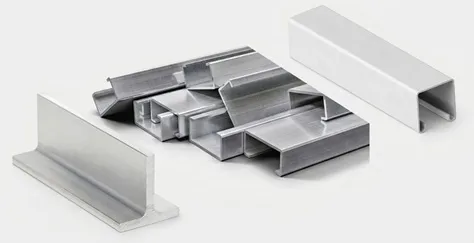
Standard structural and architectural aluminium extrusion profiles — angles, channels, T-sections, I-sections and box sections — produced to EN 755-2 mechanical properties and EN 755-9 tolerances.
These profiles fit buyers that need repeatable supply for façades, framing, support systems, machinery and fabricated assemblies without developing a new die.
- Alloys: 6060, 6063, 6061, 6082 in T5 or T6 tempers.
- Standards: EN 755-2 / EN 573-3; ASTM B221 available for US-market orders.
- Circumscribing circle: up to 320 mm typical from partner mills.
- Lengths: 6 m standard with cut-to-length coordination available.
Custom Extrusion
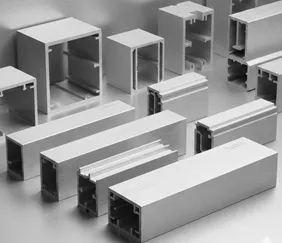
Made-to-order profiles are coordinated from your drawing or sample, including die manufacture, prototype review and serial production planning.
This route suits OEM, transport, machinery, solar and architectural buyers that need proprietary geometry, machining or surface-finish integration.
- New die lead time: typically 6–12 weeks total including die, approval and production.
- MOQ: generally from 500 kg per profile, with lower quantities possible for select geometries.
- Die ownership and tooling cost are confirmed at proforma stage.
- Precision option: EN 12020-2 tolerances for 6060 / 6063 applications.
Anodized Profiles
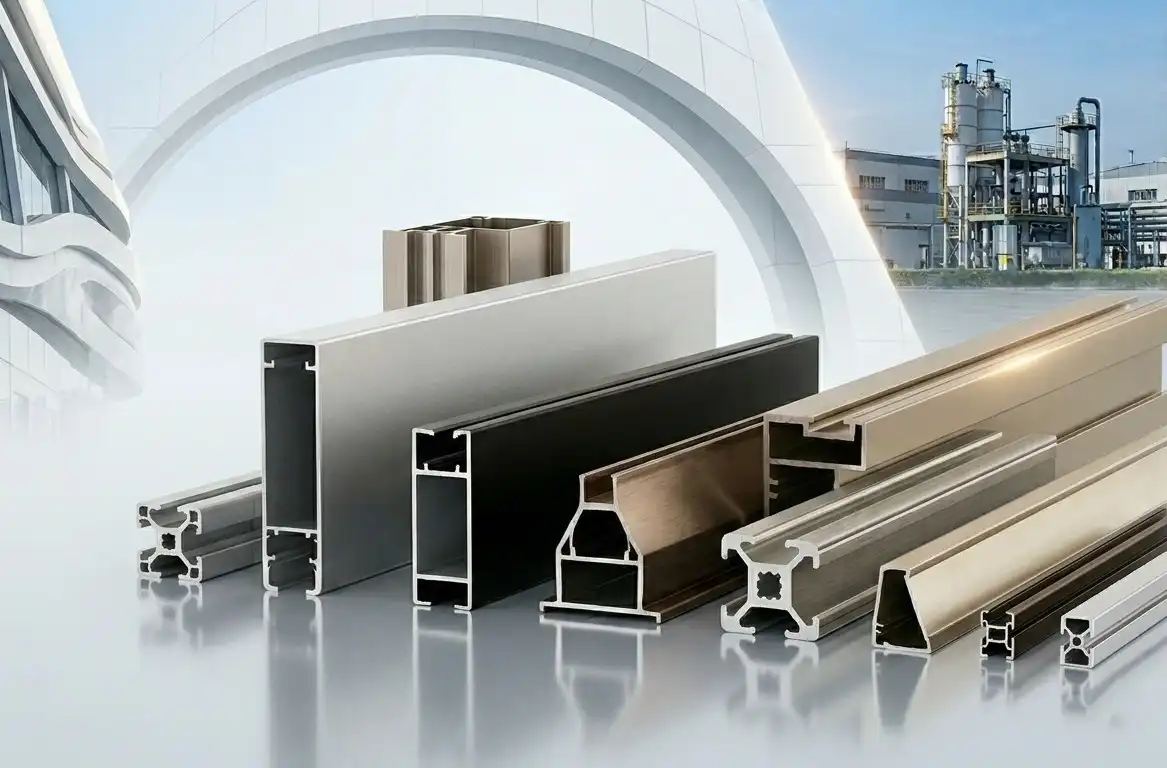
Sulfuric-acid anodized Type II profiles for architectural and industrial use are supplied with finish selection matched to exposure conditions, appearance targets and downstream fabrication requirements.
6063 and 6060 remain the preferred choices where visible surface quality and anodizing response matter most.
- Coating thickness: typically 10–25 µm; AA20 (≥20 µm) for standard exterior exposure.
- Common finishes: clear, bronze, black and dyed variants.
- Hard anodizing Type III, typically 25–75 µm, is available for engineering parts on request.
- Qualanod-class processing can be confirmed according to mill and finisher scope.
Aluminium Sheet, Coil & Plate
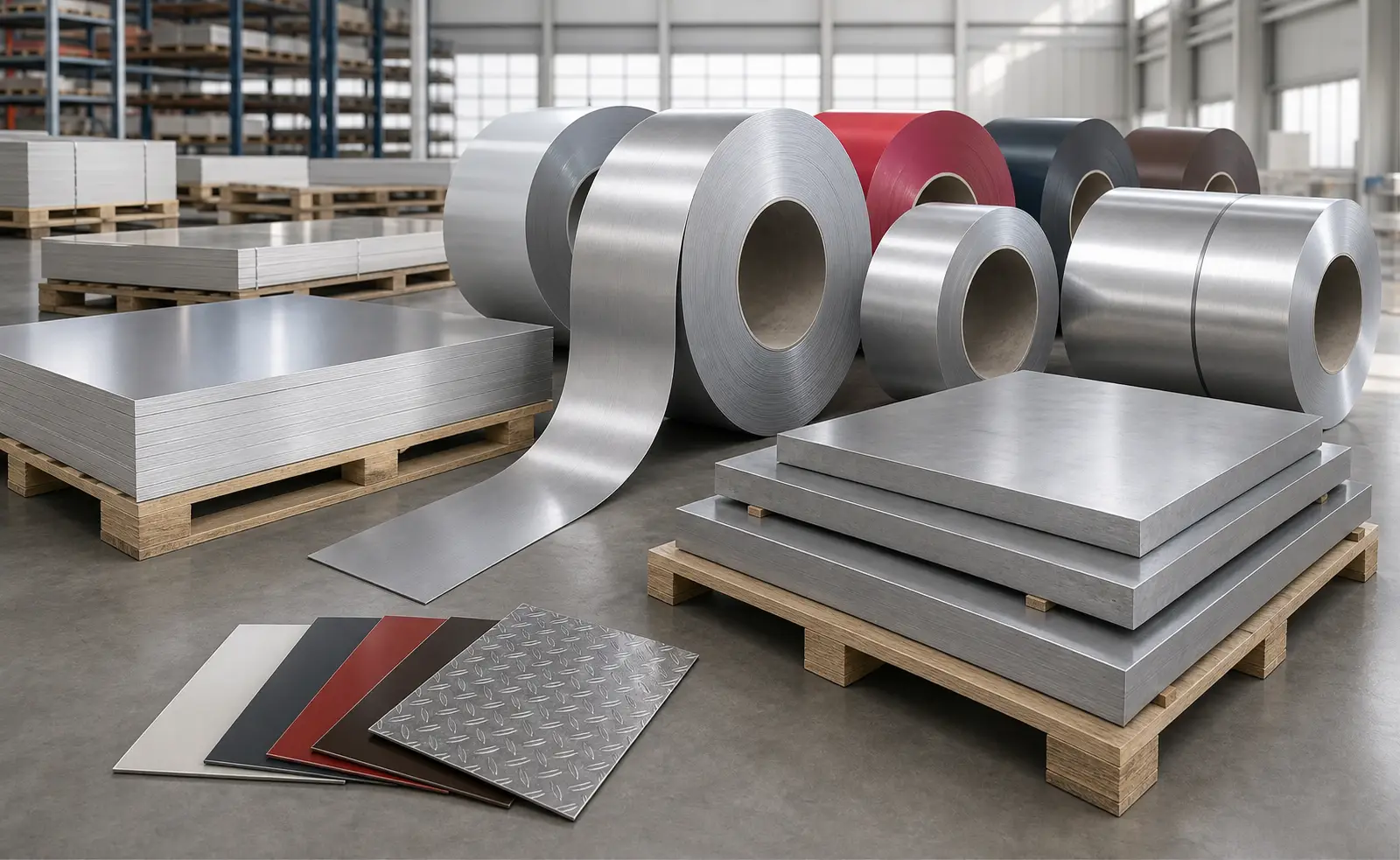
Flat-rolled aluminium is supplied for fabrication, cladding, transport, marine and general industrial use in stock or made-to-order thickness programs.
Buyers can source plain sheet, coil, plate and patterned variants such as tread and checker products through the same RFQ workflow.
- Alloys: 1050, 5052, 5083 in H116 / H321, 5754 and other rolling grades on request.
- Sheet thickness: typically 0.5–6 mm; plate above 6 mm.
- Patterned options: checker / tread plate including 5-bar and diamond styles.
- Standard basis: EN 573-3 composition with ASTM B209 available when required.
Round & Square Tubes
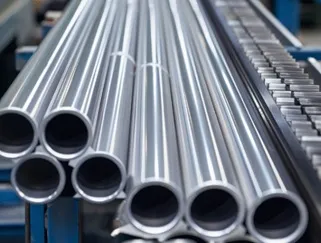
Round, square and rectangular tubes are sourced for structural, decorative, machine-building and transport projects where dimensional consistency, finish and cut lengths matter.
Supply scope includes seamless EN 755-7 routes and porthole-extruded EN 755-8 tubes depending on geometry and service requirements.
- Alloys: 6060, 6063, 6061 and 6082.
- MOQ: typically around 1 metric ton per size for mill production.
- Cut-to-length, machining and bundled export packing can be coordinated.
- Tube programs support both general engineering and precision-oriented orders.
Solar Aluminium Profiles
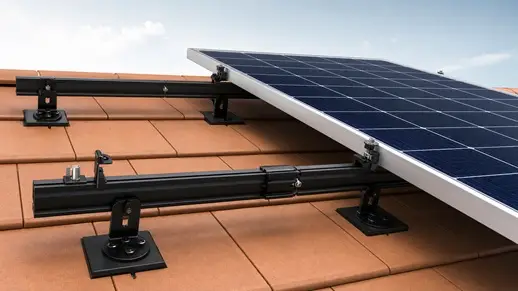
Use this route when the RFQ covers more than one PV aluminium profile family, such as rails, module frames, clamp profiles, bracket extrusions and project-specific sections.
MetalFromTurkey reviews drawings, alloy, temper, finish, tolerances, accessories, packing and document requirements before routing the RFQ to suitable Turkish supply partners.
- Scope: PV mounting rails, module frame profiles, clamp profiles, brackets, splices and custom solar extrusion families.
- Typical alloys: 6005A, 6063 or 6061 depending on structural duty, surface finish and drawing requirements.
- RFQ inputs: technical drawings, BOM, annual volume, surface finish, packing method, destination port and certificate requirements.
- Documents: MTC, Certificate of Origin, packing list, inspection record and finish certificate where applicable.
Solar Aluminium Clamps & Brackets
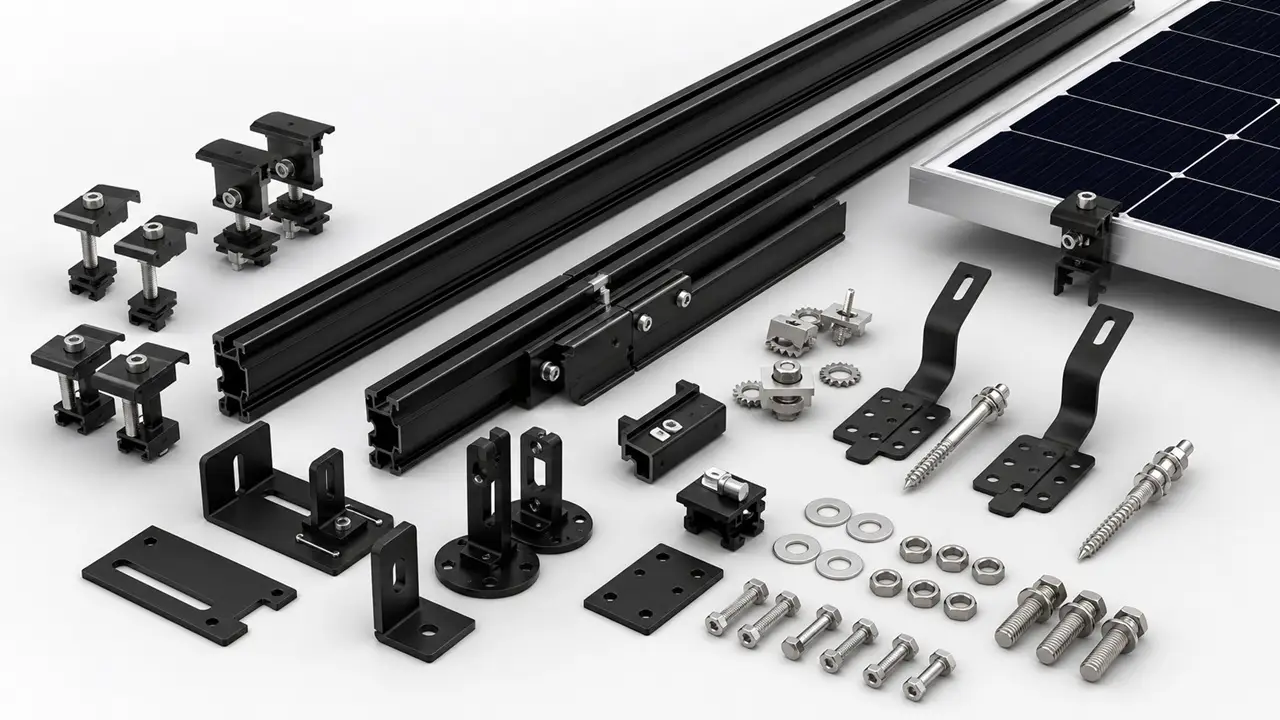
Solar clamps and brackets are reviewed as accessory hardware, not as generic retail kits. MetalFromTurkey can route mid clamps, end clamps, L-feet, rail brackets, splice connectors and stainless fastener packages to suitable Turkish supply partners.
Quote review should include module frame height, rail slot, rail drawing, clamp geometry, finish, fastener scope, packing, destination port and document requirements.
- Scope: mid clamps, end clamps, L-feet, rail brackets, splice connectors and stainless fastener packages.
- Compatibility inputs: module frame height, rail slot, rail profile and roof attachment interface.
- Documents: MTC, Certificate of Origin, packing list, inspection record and finish certificate where applicable.
- Incoterms: FOB Turkish port, CFR or CIF destination options after BOM and packing review.
Aluminium Foil
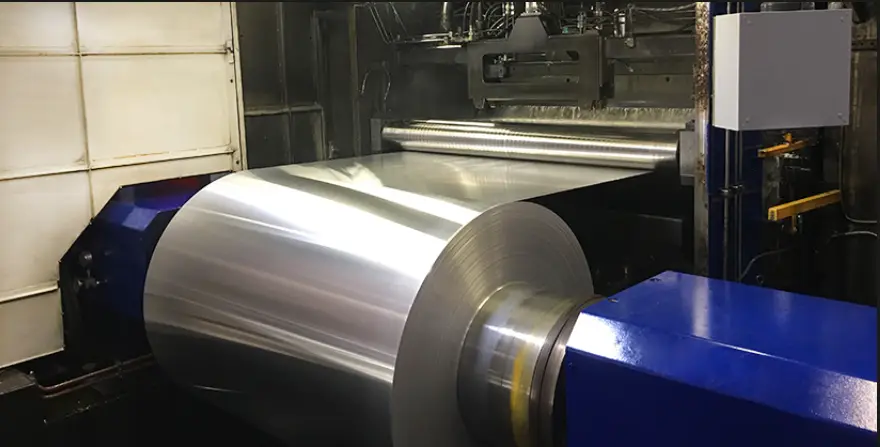
MetalFromTurkey sources industrial aluminium foil, including 100 micron rolls, in plain roll, slit coil and laminated forms for packaging, insulation, HVAC, cable shielding and converter applications where thickness, surface condition and roll geometry define the supply route.
RFQs are reviewed with alloy, temper, width, core ID, coil weight, packing, MTC scope and Incoterm confirmed before quotation to ensure comparable pricing. Turkey-origin and verified non-China supply route documentation can be provided.
- Alloy families: 1xxx (1050, 1100, 1235) and 8xxx (8006, 8011, 8079) per application.
- Thickness: from 11 µm upward; 100 µm / 0.10 mm is a common reference gauge.
- Temper: O, H14, H18, H19, H22, H24 depending on end use.
- Documents: MTC, EN 10204 3.1 where supported, CoO and export packing per RFQ.
Surface Finish and Protection Options
Mill finish remains the most economical option for hidden framing and downstream fabrication, while anodizing and powder coating are selected where corrosion resistance, appearance retention and color control matter.
Anodized Type II finishes are commonly specified at 10–25 µm, with AA20 and above preferred for more exposed exterior service. Hard anodizing Type III is available for wear-focused engineering parts.
Powder coating can be aligned with Qualicoat-class requirements and custom RAL programs. For coastal and high-UV projects, finish selection should be tied to environment, cleaning regime and expected warranty scope.
Alloy Comparison and Standards Reference
Use the tables below to shortlist the right alloy and specification route before requesting a quotation. Minimum guaranteed values depend on temper and section thickness, so the mill test certificate remains the contractual reference.
Alloy Comparison
Alloy Comparison: Alloy, EN Designation, UTS (typical), Yield (typical), Temper, Best For.
| Alloy | EN Designation | UTS (typical) | Yield (typical) | Temper | Best For |
|---|---|---|---|---|---|
| 6060 | EN AW-6060 | ~195 MPa | ~150 MPa | T5/T6 | Architectural sections and anodized profiles |
| 6063 | EN AW-6063 | ~215 MPa | ~170 MPa | T5/T6 | Complex extrusion shapes and visible surfaces |
| 6061 | EN AW-6061 | ~310 MPa | ~276 MPa | T4/T6 | General structural and North American projects |
| 6082 | EN AW-6082 | ~340 MPa | ~310 MPa | T6 | Higher-strength structural applications in Europe |
| 6005A | EN AW-6005A | ~290 MPa | ~260 MPa | T5/T6 | Solar rails, transport and medium-high strength extrusions |
| 5052 | EN AW-5052 | ~193–228 MPa | — | H32 | General-purpose sheet and formed parts |
| 5083 | EN AW-5083 | ~290–317 MPa | — | H116/H321 | Marine plate and corrosive-service applications |
- For most architectural profiles, 6063-T5 is sufficient and anodizes more cleanly than 6061.
- Specifying 6082 where 6063 would perform adequately can increase cost without adding commercial value.
- Marine service below 65°C typically points buyers toward 5083 H116 or H321 for plate and sheet programs.
Standards We Supply Against
Standards We Supply Against: Standard, Scope.
| Standard | Scope |
|---|---|
| EN 755-2 | Mechanical properties for extruded rod, bar, tube and profiles |
| EN 755-9 / EN 12020-2 | General engineering and precision profile tolerances |
| EN 573-3 | Chemical composition and product form designation |
| ASTM B221 | Extruded bars, rods, profiles and tubes for US-market orders |
| ASTM B209 | Sheet and plate route when US flat-product specification is required |
| EN 10204 Type 3.1 | Mill test certificates supplied with each shipment; Type 3.2 available by agreement |
- Turkish mills work to TS EN standards, which are direct technical adoptions of EN standards.
- Dual EN / ASTM sourcing is practical for projects supplying Europe, the Middle East and the United States from one region.
Surface Finish Options
Surface Finish Options: Finish, Specification, Typical Use.
| Finish | Specification | Typical Use |
|---|---|---|
| Mill finish | — | Industrial applications, hidden framing, downstream processing |
| Anodized Type II | 10–25 µm, Qualanod AA10–AA25 | Architectural, solar and general exterior exposure |
| Hard anodized Type III | 25–75 µm | Engineering components and wear-focused parts |
| Powder coating | Qualicoat classes | Façade systems, joinery and custom RAL projects |
Typical Delivery Times by Region
Typical Delivery Times by Region: Region, Sea Freight, Production Lead, Total (Typical).
| Region | Sea Freight | Production Lead | Total (Typical) |
|---|---|---|---|
| EU (NW Europe) | 10–15 days | 2–4 weeks | 4–6 weeks |
| UK & Ireland | 12–18 days | 2–4 weeks | 4–6 weeks |
| Middle East & Gulf | 7–12 days | 2–4 weeks | 3–5 weeks |
| North Africa | 7–10 days | 2–4 weeks | 3–5 weeks |
| USA (East Coast) | 20–28 days | 2–4 weeks | 5–8 weeks |
Quality Assurance and Certified Mill Selection
As a Turkey-based aluminium supplier and exporter, MetalFromTurkey matches each order to the most suitable mill according to alloy, profile geometry, finishing route, certification scope and delivery timing.
Partner mills support EN 755 / EN 12020 for extruded products, EN 573-3 for alloy composition control, and ASTM B221 / B209 when US-market compliance is needed. ISO 9001:2015 quality systems are standard across the qualified supply base.
Dimensional checks, mechanical testing and surface inspection are completed before shipment, and third-party witness inspection can be added whenever the buyer's project or QA protocol requires it.
- EN 755 / EN 12020 for extruded product mechanical properties and tolerances
- EN 573-3 for alloy composition control
- ASTM B221 / B209 for US-market orders on request
- ISO 9001:2015 at partner mills
- Qualanod / Qualicoat scope confirmation for anodizing and powder coating where applicable
- EN 10204 Type 3.1 MTC with every shipment; Type 3.2 available with third-party witness
We benchmark each project across certified Turkish mills, then coordinate QA, inspection and export documentation under one sourcing workflow.
Vehbi KOÇ — Senior Technical Sourcing EngineerHow Aluminium Supply from Turkey Is Coordinated
A typical sourcing workflow starts with alloy, temper, geometry, finish and destination review so the RFQ can be matched to the right production route — stock profile, made-to-order extrusion, tube mill program or flat-rolled allocation.
Commercial benchmarking then compares Turkish mills for certification fit, press capability, lead time, finishing availability and landed logistics rather than relying on a single-factory quote.
Once the order is aligned, production, finishing, inspection and export paperwork are coordinated around the agreed Incoterm so the buyer receives one consolidated commercial track from inquiry to shipment.
Supply Scope Snapshot by Product Type
Supply Scope Snapshot by Product Type: Product Type, Typical Supply Scope, Common Alloys, Typical MOQ, Lead Time, Key Standards.
| Product Type | Typical Supply Scope | Common Alloys | Typical MOQ | Lead Time | Key Standards |
|---|---|---|---|---|---|
| Extrusion profiles | Standard structural and architectural sections | 6060, 6063, 6061, 6082 | 100–200 kg stock / 500 kg MTO | 1–5 days stock / 2–4 weeks MTO | EN 755-2, EN 755-9, ASTM B221 |
| Custom extrusion | Drawing-based OEM profiles with tooling | 6060, 6063, 6005A, 6061, 6082 | From 500 kg per profile | 6–12 weeks total with new die | EN 755-2, EN 12020-2 where applicable |
| Anodized profiles | Architectural and industrial finished profiles | 6060, 6063 | Linked to base extrusion MOQ | Base production + finishing | EN 12373 context, Qualanod scope by finisher |
| Sheet, coil and plate | Flat-rolled products for fabrication and marine use | 1050, 5052, 5083, 5754 | Project-dependent | Stock or rolling schedule based | EN 573-3, ASTM B209 |
| Round and square tubes | Extruded round, square and rectangular tubes | 6060, 6063, 6061, 6082 | Typically 1 ton per size | 2–4 weeks | EN 755-7/8, ASTM B221/B241 by product type |
Industries We Serve
Turkish aluminium supply is relevant across construction, solar, industrial machinery, transport and marine sectors where buyers need a mix of extrusion capability, corrosion performance and export responsiveness.
Construction & Façade. Architectural profiles and anodized profiles in 6060 / 6063 remain the standard route for visible surfaces, curtain wall sections and joinery systems.
Solar & Energy. 6005A and 6063 mounting rails support PV structures for EPC contractors that need project quantities, anodized finish consistency and EU-oriented delivery windows.
Industrial & Machine Framing. Standard profiles and custom extrusion programs help OEM machine builders consolidate geometry, machining and export packing.
Transport. 6082-T6 structural sections and 5754 or 5052 flat products serve trailer, rail, bodywork and lightweight industrial fabrication projects.
Marine. 5083 H116 / H321 plate and sheet are selected where weldability and corrosion resistance are critical in saltwater environments.
Source aluminium from Turkey
Compare Turkish mills for profiles, sheets, tubes and custom extrusion under one RFQ workflow.
Commercial Planning for Aluminium Procurement
For most projects, the commercial decision comes down to the right balance between alloy, finish, tooling requirement, minimum quantity and delivery window. Turkish supply is especially competitive when buyers want regional delivery speed without sacrificing certification depth.
Minimum order quantities and lead times
- Stock standard profiles can start from roughly 100–200 kg and ship in 1–5 business days.
- Made-to-order production generally starts from 500 kg per custom profile.
- Tube programs are commonly planned from around 1 metric ton per size.
- New custom dies usually add 6–12 weeks including die manufacture and first-article approval.
Production for repeat MTO orders is typically 2–4 weeks before sea freight, while finishing operations such as anodizing or powder coating can extend the total program depending on line load and approval requirements.
How pricing is quoted
- Pricing can be quoted on an LME-linked basis or as a fixed validity-period offer.
- FOB Turkish port, CFR and CIF destination-port options can all be arranged according to Incoterms preference.
- Custom extrusion quotations should separate or clearly identify tooling cost, alloy, finish and logistics assumptions.
Because Turkish mill capability varies by geometry, finish and certification scope, price benchmarking across the qualified network is often the most effective way to secure the right landed cost rather than simply the lowest ex-works price.
Documentation and inspection
- EN 10204 Type 3.1 mill test certificate with each shipment.
- Certificate of origin, bill of lading and export documents coordinated to destination requirements.
- Third-party inspection by SGS, BV or TÜV available on request.
- CBAM-relevant commercial and material data can be supported for EU buyers where applicable.
For regulated or high-value projects, buyers should define document package, witness points and acceptance criteria at RFQ stage so inspection and shipment planning stay aligned from the beginning.
From Inquiry to Delivery
Send your technical and commercial inputs, then let MetalFromTurkey coordinate mill selection, production planning and export execution.
Step 1 — Submit your inquiry. Share alloy, temper, profile drawing or standard section, quantity, finish and delivery port via the quote form or email.
Step 2 — Receive proforma and sourcing confirmation. We confirm mill selection, pricing basis, die cost where applicable, lead time and inspection scope.
Step 3 — Production and inspection. Production is scheduled at the selected mill, surface treatment is added where required, and pre-shipment inspection follows the agreed scope.
Step 4 — Delivery and documentation. Shipment is loaded from the relevant Turkish port with MTC, certificate of origin, bill of lading and project documents prepared for destination requirements.
Request Your
Aluminium Quotation
Submit your specification and receive a detailed quotation within 24 hours. No commitment required.
Common Questions
Why source aluminium from Turkey?
Turkey is one of the leading aluminium processing hubs supplying Europe, ranking strongly in global aluminium product exports and supporting a large extrusion base with around 75 dedicated extrusion companies. A significant share of exports goes to EU countries, backed by the EU-Turkey Customs Union and 10–15 day sea transit from Turkish ports. MetalFromTurkey supplies extrusions, sheets and tubes from these certified mills with full export documentation.
Which aluminium alloys and standards are available?
Partner mills extrude 6xxx structural and architectural alloys such as 6060, 6063, 6061, 6082 and 6005A, and roll 1xxx / 5xxx flat products such as 1050, 5052, 5083 and 5754. Supply can follow EN 755-2 mechanical properties, EN 573-3 composition and EN 755-9 or EN 12020-2 tolerances, with ASTM B221 and B209 available for US-market orders. Marine tempers H116 and H321 are supplied for 5083.
What is the minimum order quantity and lead time?
Stock standard profiles can start from around 100–200 kg and ship within 1–5 business days. Made-to-order production typically starts from 500 kg per custom profile and around 1 metric ton per tube size, with 2–4 weeks production plus regional sea transit. New custom dies generally add 6–12 weeks including die manufacture and first-article approval.
How is aluminium pricing quoted?
Quotations are project-specific and can be benchmarked across qualified Turkish mills. Pricing may be LME-linked or fixed for the validity period, and can be offered FOB Turkish port, CFR or CIF destination port depending on Incoterms preference. Custom extrusion quotations also identify tooling cost and any finish or inspection assumptions relevant to the order.