
316L Stainless Steel Pipe Supplier
Low-Carbon 316 for Chloride & Marine Service
MetalFromTurkey supplies 316L stainless steel pipe for chloride exposure, marine service and weld-heavy industrial piping. We act as a Turkey-based stainless steel pipe supplier and exporter, giving buyers one RFQ process for welded and seamless 316L pipe from certified Turkish mills. Supply can include ASTM A312 TP316L, EN 10216-5, EN 10217-7, UNS S31603 and DIN/EN 1.4404 options with EN 10204 3.1 MTCs, PMI and inspection documentation where required.
Welded vs Seamless 316L Pipe
MetalFromTurkey can quote 316L pipe in welded and seamless forms. The correct route depends on pressure class, size, wall thickness, surface requirement, inspection scope and lead time.
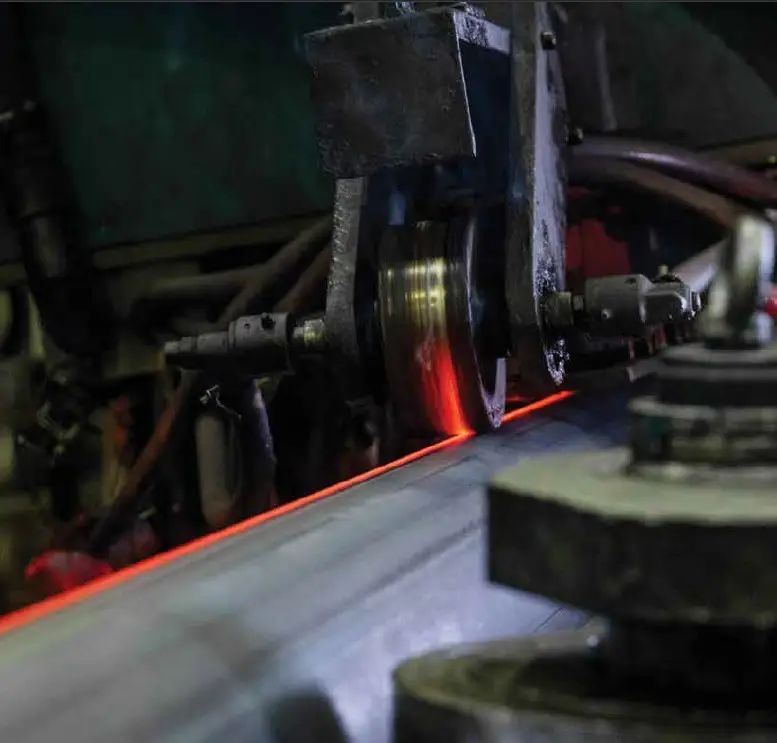
Welded 316L Pipe
Welded 316L pipe is usually the cost-effective route for process piping, food equipment, pharmaceutical lines, marine service and general industrial supply. Common references include ASTM A312, ASTM A358 and EN 10217-7, depending on diameter, welding route and project standard. Specify welded 316L pipe when the project can accept a longitudinal weld seam and needs competitive pricing, schedule availability and clean documentation. Typical RFQ details include OD or NPS, wall thickness or schedule, length, weld test scope, surface finish and MTC requirements.
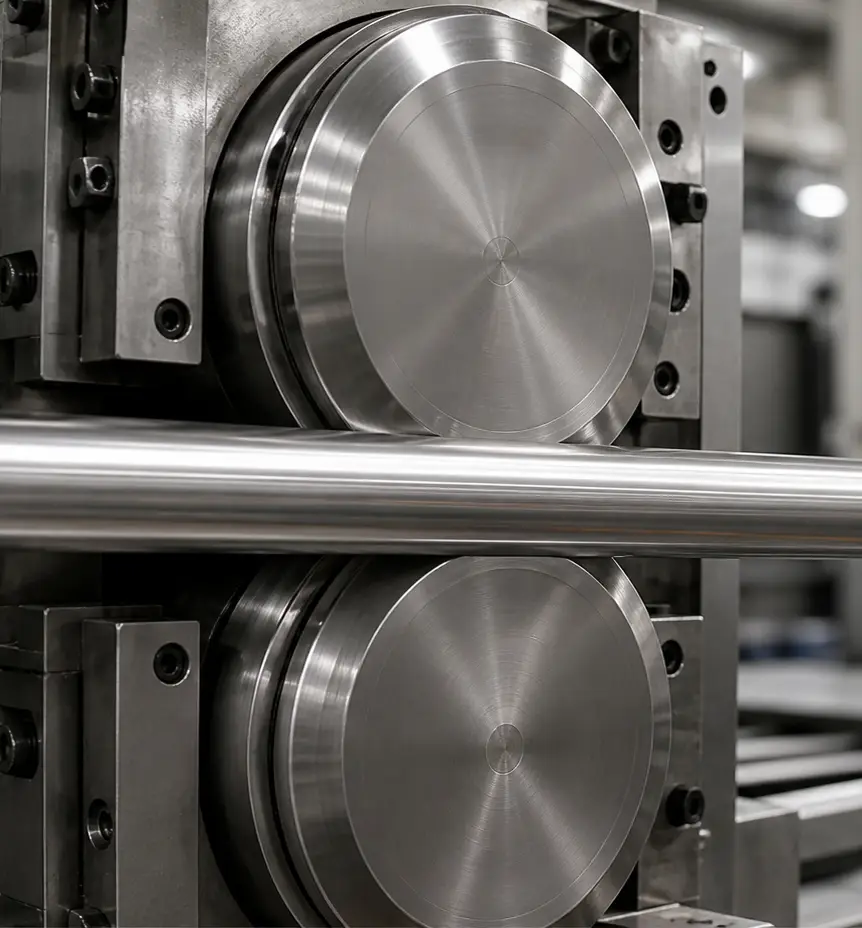
Seamless 316L Pipe
Seamless 316L pipe is selected when the project specification requires no weld seam, higher integrity under pressure, thermal cycling resistance or a seamless-only standard route. Common references include ASTM A312, ASTM A213 and EN 10216-5. Use seamless 316L pipe when the standard, pressure class or end-user specification requires it. Where welded pipe is technically acceptable, it may reduce cost and lead time. Our team can compare both options when the RFQ includes service conditions and inspection expectations.
316L Grade, Chemistry & Size Reference
316L stainless steel pipe is the low-carbon version of 316 stainless steel pipe, used where corrosion resistance and welded fabrication both matter. The "L" grade limits carbon to 0.03% maximum, which reduces carbide precipitation at the weld zone and helps avoid weld decay when the pipe is not post-weld annealed. 316L belongs to the molybdenum-bearing austenitic stainless steel family. Compared with 304, the molybdenum addition improves resistance to chloride pitting in marine, coastal, pharmaceutical, food processing and chemical process environments. The final suitability still depends on fluid chemistry, temperature, cleaning method, pressure class and inspection requirements. The difference between 316 and 316L is mainly carbon content. 316 allows higher carbon, while 316L is controlled for welded service. If the component will be welded and will not be post-weld annealed, specify 316L to reduce the risk of carbide precipitation at the weld zone. Many industrial 316L pipe orders are supplied as 316/316L dual-certified material when the heat chemistry and mechanical properties meet both requirements. This can help buyers simplify procurement when drawings, MTOs or legacy project specifications mention both grade names.
316L vs 316: Why the "L" Matters
316L vs 316: Why the "L" Matters: Decision Factor, 316 Stainless Steel Pipe, 316L Stainless Steel Pipe.
| Decision Factor | 316 Stainless Steel Pipe | 316L Stainless Steel Pipe |
|---|---|---|
| Carbon limit | 0.08% max, depending on standard | 0.03% max |
| Welded fabrication | May require more care after welding in sensitization-prone service | Preferred for weld-heavy piping without post-weld annealing |
| Corrosion profile | Molybdenum-bearing stainless for chloride resistance | Similar molybdenum benefit, with lower weld-zone sensitization risk |
| Typical use | General process piping, fittings and components | Marine, pharmaceutical, food, chemical and process piping with welding |
| Procurement note | Can be suitable when the specification allows it | Often ordered as 316/316L dual-certified material |
Chemical Composition & PREN (ASTM A312 TP316L)
Chemical Composition & PREN (ASTM A312 TP316L): Element, Typical Limit / Range.
| Element | Typical Limit / Range |
|---|---|
| Carbon (C) | 0.030 max |
| Manganese (Mn) | 2.00 max |
| Silicon (Si) | 1.00 max |
| Phosphorus (P) | 0.045 max |
| Sulfur (S) | 0.030 max |
| Chromium (Cr) | 16.00-18.00 |
| Nickel (Ni) | 10.00-14.00 |
| Molybdenum (Mo) | 2.00-3.00 |
| Nitrogen (N) | 0.10 max |
316L Pipe Size & Schedule Chart (NPS / DN, Sch 5S-80S)
316L Pipe Size & Schedule Chart (NPS / DN, Sch 5S-80S): NPS, DN, OD (mm), Sch 5S WT (mm), Sch 10S WT (mm), Sch 40S WT (mm), Sch 80S WT (mm).
| NPS | DN | OD (mm) | Sch 5S WT (mm) | Sch 10S WT (mm) | Sch 40S WT (mm) | Sch 80S WT (mm) |
|---|---|---|---|---|---|---|
| 1/2" | 15 | 21.3 | 1.65 | 2.11 | 2.77 | 3.73 |
| 1" | 25 | 33.4 | 1.65 | 2.77 | 3.38 | 4.55 |
| 2" | 50 | 60.3 | 1.65 | 2.77 | 3.91 | 5.54 |
| 4" | 100 | 114.3 | 2.11 | 3.05 | 6.02 | 8.56 |
| 6" | 150 | 168.3 | 2.77 | 3.40 | 7.11 | 10.97 |
| 8" | 200 | 219.1 | 2.77 | 3.76 | 8.18 | 12.70 |
| 12" | 300 | 323.8 | 3.96 | 4.57 | 9.53 | 17.48 |
| 24" | 600 | 610.0 | 4.78 | 6.35 | 17.48 | 30.96 |
Standards & Grade Equivalents
Standards & Grade Equivalents: Commercial Grade, ASTM / ASME, UNS, EN / DIN, JIS, Notes.
| Commercial Grade | ASTM / ASME | UNS | EN / DIN | JIS | Notes |
|---|---|---|---|---|---|
| 316L stainless steel pipe | ASTM A312 TP316L | UNS S31603 | 1.4404 | SUS316L | Low-carbon molybdenum-bearing austenitic stainless |
| 316 stainless steel pipe | ASTM A312 TP316 | UNS S31600 | 1.4401 | SUS316 | Higher carbon limit than 316L |
| 316/316L dual-certified | Project-specific | S31600 / S31603 where certified | 1.4401 / 1.4404 where certified | Project-specific | Must be confirmed on the MTC |
For engineering comparison, PREN is commonly estimated as %Cr + 3.3 x %Mo + 16 x %N. A typical 316L heat often falls around PREN 24-26, depending on the certified chemistry. Use this as an orientation value, not a substitute for project corrosion design. Availability depends on welded or seamless route, wall thickness, quantity, inspection scope and delivery term. Larger or non-standard wall thicknesses can be reviewed when drawings or a size list are available. For higher chloride exposure combined with stress-corrosion-cracking risk, duplex 2205 may be a better technical route than 316L — compare with the 304 vs 316 comparison on the stainless steel pipe overview.
Why Source 316L Pipe from Turkey
Turkey can give 316L pipe buyers a practical balance of regional logistics, stainless processing capability and export documentation discipline.
Practical regional logistics
For European, Balkan, Caucasus and MENA destinations, Turkish supply can shorten the commercial route while keeping certificates, inspection and shipment terms clear.
One RFQ, multiple certified mills
MetalFromTurkey supports one RFQ process for welded and seamless 316L pipe. Buyers can compare suitable Turkish mill options, documentation scope and delivery terms without turning the inquiry into a long supplier-by-supplier search.
Standards, Equivalents & Certifications
316L pipe buyers often search by grade name, UNS number, EN material number or ASTM designation. Use the equivalents table above to align drawings, RFQs and mill test certificates before ordering. Documentation can include EN 10204 3.1 MTC, ISO 9001 evidence from the relevant supply route, PMI, hydrostatic test records, dimensional inspection, NDT reports and third-party inspection coordination when required. Standards must match product form: EN 10216-5 is the seamless route, while EN 10217-7 is the welded route.
Industries & Applications
316L stainless steel pipe is used where 304 may be under-specified because of chloride exposure, cleaning chemicals, welded fabrication or corrosion-critical service.
Marine and coastal projects
Salt air, splash-zone-adjacent equipment, harbor systems and vessel-related process lines where 304 may pit too quickly.
Food and pharmaceutical equipment
Hygienic process lines, CIP systems, skids and equipment assemblies where welded joints and cleanability matter.
Chemical and process piping
Lines exposed to compatible acids, cleaning agents, chlorides or process fluids where the project standard calls for 316L.
Petrochemical and industrial utilities
Corrosion-critical utility lines, maintenance packages and mixed stainless pipe requirements with MTC and inspection scope.
Pricing & RFQ for 316L Pipe
316L stainless steel pipe price is driven by nickel and molybdenum markets, welded or seamless form, NPS or OD, wall thickness, surface finish, inspection scope, quantity and delivery term. It is typically priced above 304 because of molybdenum and higher nickel content, but the real gap is project-dependent. For an accurate quote, send:
Grade
316L or 316/316L dual-certified.
Form
Welded, seamless or precision tube.
Standard
ASTM A312, A213, A358, EN 10216-5, EN 10217-7 or project standard.
Size
NPS/DN, OD, schedule or wall thickness, length.
Quantity
Tons, meters or pieces per size.
Documentation
EN 10204 3.1 / 3.2, PMI, NDT, hydrotest or third-party inspection.
Delivery term and destination
FOB Turkish port, CFR, CIF or project-specific terms.
Common Questions
What is 316L pipe?
316L is the low-carbon version of 316 stainless steel pipe. The reduced carbon content, 0.03% maximum in common ASTM A312 TP316L chemistry, helps prevent carbide precipitation at weld zones and makes 316L a preferred choice for welded piping that will not be post-weld annealed.
Is there a difference between 316 and 316L?
Yes. The main difference is carbon content. 316 can allow up to 0.08% carbon, while 316L limits carbon to 0.03% maximum. Mechanical properties are otherwise similar for many procurement uses, but 316L gives better weld-zone sensitization resistance in heavy-gauge or non-heat-treated welded sections.
Which is better, 304 or 316L stainless steel?
316L contains molybdenum, giving it better resistance to chloride pitting than 304. For marine, chemical process, de-icing salt or coastal exposure, 316L is usually the better technical choice. For indoor food-grade or mild process service, 304 or 304L may be sufficient and more cost-effective.
Is 316L stainless steel good quality?
316L is a globally used industrial stainless grade for marine, pharmaceutical, food and chemical process piping. Quality depends on the certified chemistry, product standard, dimensional control, inspection scope and MTC documentation, not only on the grade name.
What sizes and schedules are available?
316L stainless steel pipe can commonly be reviewed from NPS 1/2 inch to 24 inch, DN 15-600, in schedules such as 5S, 10S, 40S and 80S. Availability depends on welded or seamless form, wall thickness, quantity, inspection scope and delivery timing.
Need
316L Stainless Steel Pipe?
Send grade, form, standard, size, quantity, documentation and delivery term. We will return a mill-matched quotation with lead-time guidance.
Ready to shortlist
your 316L pipe supply?
Send the RFQ once with grade, form, standard, size, quantity, documentation and delivery term. That removes most of the commercial back-and-forth before mill comparison starts.
Üçevler Mah. İzmiryolu Cad. Westpoint İş Merkezi D Blok Kat:6 Ofis:118 No:241D Nilüfer BURSA / Türkiye